
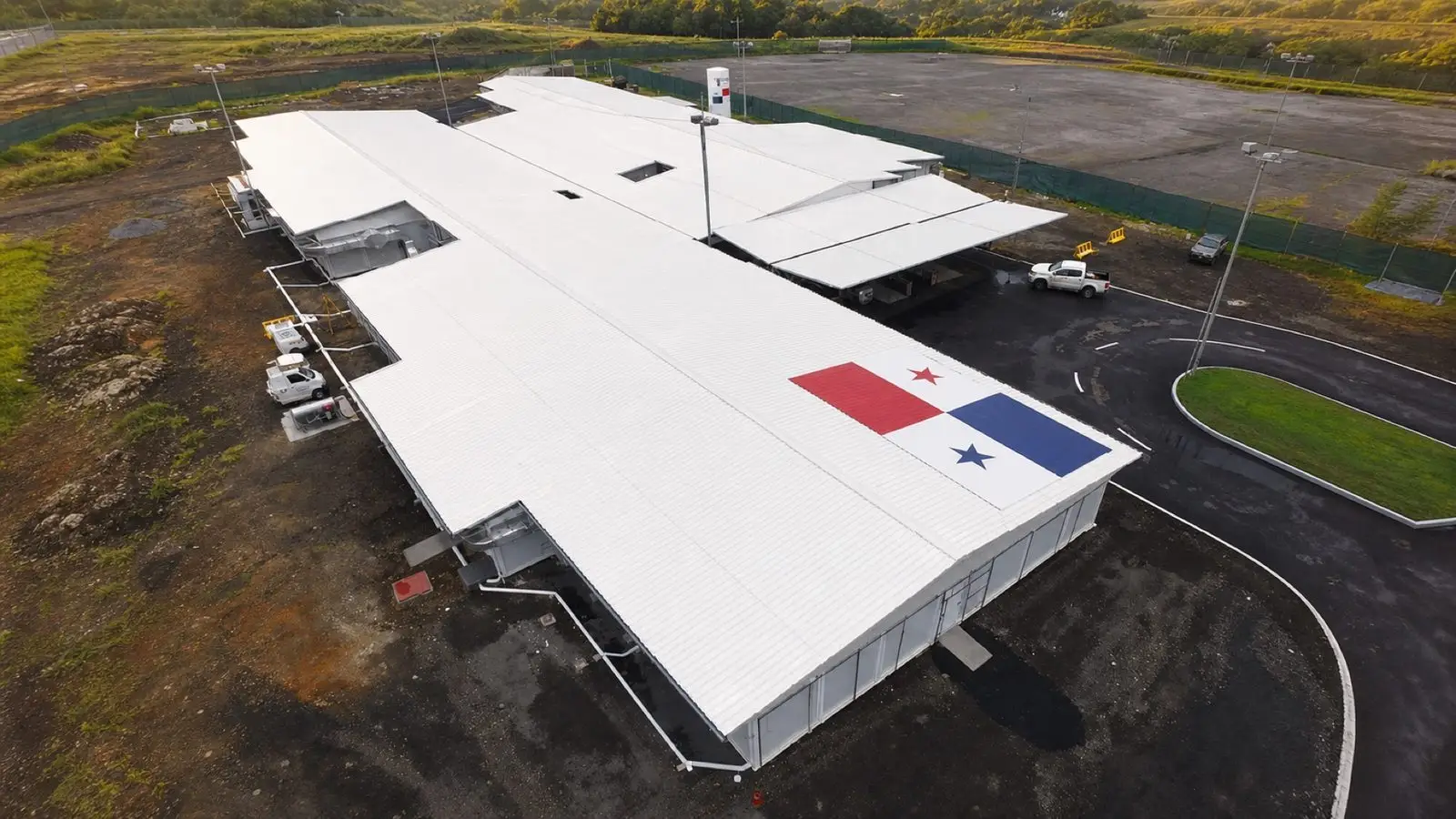
Modular hospitals and clinics, built turnkey
SmartBrix Construction builds modular hospitals and prefabricated health posts (small clinics) with MEP systems pre-integrated at the plant and expandable in phases, for health networks that cannot wait years for construction; every project is designed to NSR-10 and REP-2021. Construction reference (built by SmartBrix): Hospital Modular in Panama City, 2,430 m² (about 26,200 sq ft) delivered in 30 days.
- MEP pre-integrated at the plant: electrical and plumbing systems installed in every module before dispatch.
- Interconnectable modules: capacity grows in phases with demand and relocates when needs change.
- Turnkey: from BIM design and engineering to furniture and equipment, under one contract with one point of responsibility.
- Construction reference (built by SmartBrix): Hospital Modular, 2,430 m² delivered in 30 days in Panama City, the shortest delivery in the documented portfolio.
Care capacity in weeks, not years.
When demand for care grows faster than infrastructure, every month of construction means patients who go without care.
In healthcare, the construction schedule determines how much care capacity exists. A health emergency, an overloaded hospital, or a network that needs clinics in remote areas cannot wait the years a traditional hospital project takes, with wet, sequential construction exposed to the delays of coordinating multiple contractors. Adding beds, exam rooms, or support services requires a building system that responds fast.
SmartBrix's modular construction changes the construction sequence. While civil works advance on site, the modules are fabricated at the plant in parallel, in Zn-Al-Mg 275 g/m² steel. Modules leave the factory with MEP pre-integrated, meaning electrical and plumbing systems are installed before dispatch. On site, dry assembly takes weeks: a process up to 90% faster than traditional construction, with up to 30% less construction waste.
For permanent, larger healthcare buildings, steel framing complements the modular line. In both cases SmartBrix delivers the project turnkey, from BIM design and engineering to furniture and equipment, designed to NSR-10 in Colombia and REP-2021 in Panama, with electrical systems to RETIE. Work is carried out under PEB Corp Group's integrated management system, certified to ISO 9001, 14001, 45001, and 37001.
Construction reference: SmartBrix Construction built the Hospital Modular in Panama City (2,430 m², 30 days).
Six advantages for healthcare infrastructure.
What the modular system solves in hospitals and clinics, with evidence from a delivered project.
-
01
Pre-integrated hospital MEP
Electrical and plumbing systems are installed in every module at the plant, before dispatch. On site, modules are only interconnected; electrical systems comply with RETIE in Colombia.
-
02
Expandable module by module
Interconnectable modules grow in phases: capacity expands by adding modules as service demand grows, without demolishing what is built or stopping operations.
-
03
Layouts and finishes designed for infection control
The layout is defined room by room in the BIM model before fabrication: separate circulation routes and flows, and finishes specified for easy cleaning and disinfection.
-
04
Relocatable when needs change
Modules are dismantled and moved, so the infrastructure follows demand (from a health emergency to a permanent site) instead of sitting idle.
-
05
Designed to NSR-10, REP-2021, and RETIE
Every project is designed and calculated to the code of its jurisdiction: NSR-10 in Colombia, REP-2021 in Panama, and IBC where applicable, with electrical systems to RETIE. Permit documentation is included.
-
06
30 days in a documented case
Construction reference (built by SmartBrix): the Hospital Modular in Panama City, 2,430 m² turnkey, was delivered in 30 days. It is a documented project in the group's portfolio.

Interconnectable modules · MEP pre-integrated before dispatch
Hospital Modular: 2,430 m² in 30 days.
Area, schedule, and location verifiable in the portfolio. A reference project’s area and delivery period describe that case; they do not guarantee another building’s schedule.
At the Hospital Modular in Panama City, SmartBrix built it: 2,430 m² of hospital infrastructure assembled on site and delivered in 30 days. No other project in the documented portfolio was delivered in less time.
Timelines, MEP, and codes for healthcare.
The data a health authority or hospital operator needs to evaluate the modular option.
- Health posts (clinics)
- Deployment in weeks: prefabricated, relocatable modules with pre-integrated MEP
- MEP
- On current modular projects, pre-integrated at the plant: electrical and plumbing systems installed in every module before dispatch
- Codes
- NSR-10 (Colombia) · REP-2021 (Panama) · RETIE (Colombian electrical code) · IBC
- Modular hospital
- 30 days in the documented case (Hospital Modular built by SmartBrix, 2,430 m², Panama City) · complete projects in 60–120 days depending on scope
- Delivery model
- Turnkey and fully equipped: BIM design and engineering, supply of the structure and modules, logistics, civil works, erection, and furniture and equipment under one contract
Frequently asked questions about modular hospitals.
How soon can a modular hospital operate?
Are electrical and plumbing systems included?
Can the hospital be expanded after delivery?
How much does a modular hospital cost?
Related guide: Modular healthcare facilities: how to plan, phase, and expand →
Your healthcare facility, operating in weeks.
Tell us the area, services, and location of the project. Reply within 24 business hours · technical proposal / quote in 48 h.